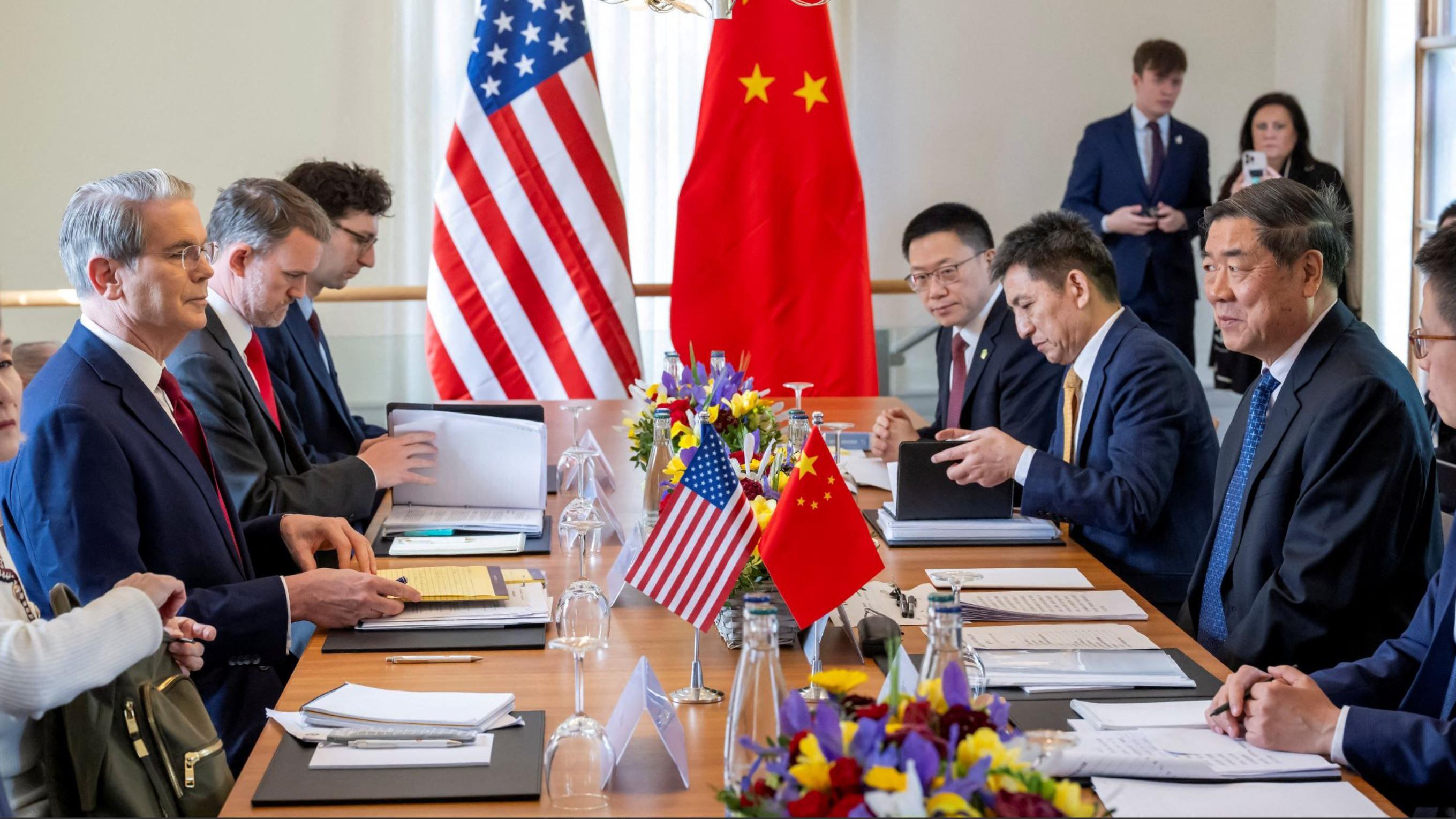
Diplomatic negotiations between the United States and China have resumed, reigniting hopes that the two global powers may extend their fragile truce in the ongoing trade dispute. After years of escalating tariffs and retaliatory measures that disrupted global supply chains and unsettled markets, the return to formal dialogue signals a potential shift toward stabilization and mutual accommodation.
Los diálogos, que ocurren en un entorno geopolítico complicado, resaltan la importancia crítica para ambas naciones. La economía global sigue enfrentando incertidumbres impulsadas por las presiones inflacionarias, las vulnerabilidades en la cadena de suministro y los cambios en las alianzas políticas. En este contexto, los esfuerzos por evitar una mayor escalada comercial se han vuelto más urgentes, no solo para Washington y Beijing, sino también para las empresas, trabajadores y consumidores a nivel mundial.
The commercial dispute involving the United States and China truly took off in 2018, initiated by the Trump administration’s tariffs on vast amounts of Chinese imports. Alleging breaches involving intellectual property, compelled tech transfers, and inequitable trading actions, officials from the U.S. contended that China’s economic strategies demanded strong responses. In retaliation, China implemented its own tariffs, resulting in a reciprocal pattern that impacted a range of goods from farm products to cutting-edge technologies.
At the beginning of 2020, a partial deal was accomplished, referred to as “Phase One.” This deal involved commitments by China to boost its acquisition of American products and to enhance the enforcement of intellectual property rights. Despite this, the implementation was inconsistent, and significant issues like state subsidies, industrial policy, and digital regulations were not addressed. While the agreement temporarily eased tensions, the issues never entirely faded.
With the Biden administration assuming leadership in 2021, the U.S. upheld numerous tariffs and trade policies from the Trump administration, while expressing a desire for a more collaborative and tactical approach. The present discussions indicate this shift—aiming for advancement through organized discussions instead of independent actions.
For Washington, the primary objectives remain consistent: improved market access for U.S. firms, stronger protection of intellectual property rights, and curbs on what it sees as anti-competitive practices by Chinese state-owned enterprises. American businesses have long sought greater clarity and fairness in areas like licensing, data flows, and investment restrictions.
Simultaneously, U.S. officials face domestic pressure to show they are safeguarding American employment and sectors. This has resulted in heightened examination of Chinese imports in areas like semiconductors, renewable energy, and pharmaceuticals—sectors deemed essential for national security and economic strength.
Beijing, for its part, is seeking assurances that further tariff hikes can be avoided and that U.S. export controls will not be expanded indiscriminately. Chinese leaders also want to secure stable access to key markets and technologies while preserving their ability to manage the domestic economy through state planning. As China navigates post-pandemic recovery and ongoing property market instability, economic certainty has become a top priority.
The latest announcements from both parties indicate an openness to finding common ground, at least in terms of procedures. The renewal of discussions at the ministerial level, along with meetings of working groups focused on technical topics, signifies a departure from the earlier phases of the conflict, which were characterized by a confrontational approach.
U.S. representatives have stressed the importance of “guardrails” to responsibly handle competition, preventing unexpected events or unplanned escalations. Chinese officials have expressed comparable views, advocating for consistent relations and mutual respect. Despite the absence of a complete resolution proposal, the focus on conversation alone indicates a small yet significant change.
Economic indicators further intensify the situation. Exporters from the U.S., notably those in agriculture and manufacturing, have experienced interruptions in Chinese demand as a result of tariffs and unclear regulations. At the same time, Chinese companies, particularly those in technology and consumer products, encounter increasing challenges when trying to enter or grow in the American market. It is beneficial for the private sectors of both nations to reestablish a stable trade atmosphere.
Despite the renewed dialogue, significant obstacles remain. Structural disagreements—particularly around China’s state-driven economic model—make it difficult to reach consensus on deeper reforms. American policymakers continue to express concern about industrial subsidies and market distortions that, in their view, disadvantage foreign competitors.
Moreover, in recent years, the bipartisan attitude in the United States has strengthened, with representatives from both leading parties advocating for stricter positions on China’s trade actions, cybersecurity conduct, and human rights history. Any deal achieved by negotiators must be presented in a manner that appeases domestic political pressures while preserving the prospects for enduring cooperation.
For China, achieving equilibrium between adaptability in foreign policy and maintaining economic stability at home is also a complex task. Beijing needs to handle nationalist fervor while making sure that any concessions during talks do not come across as indications of frailty or concession. Communication to the public, both inside and outside the country, will be crucial for sustaining political backing.
Beyond the bilateral interaction, the results of trade discussions between the U.S. and China have significant effects on the world economy. The trade conflict has caused firms to spread their production to regions like Southeast Asia and Latin America. If the tension continues for an extended period, it might speed up the separation of the two markets, influencing investment dynamics, technological advancement, and worldwide pricing mechanisms.
Conversely, a durable trade truce could bolster investor confidence, support global recovery efforts, and provide a framework for addressing other shared challenges, such as climate change, technology governance, and public health preparedness. The stakes extend well beyond tariffs and quotas—they touch on the future architecture of global commerce.
In this context, the resumption of negotiations, though modest in scope, sends a positive signal to financial markets and multinational businesses. Currency stability, commodity pricing, and cross-border capital movements are all sensitive to the tone and substance of U.S.-China relations. Even incremental progress can generate measurable economic benefits.
The restart of trade discussions between the United States and China marks a critical juncture in one of the most consequential bilateral relationships in the world. While the path forward is uncertain and the obstacles substantial, the willingness to re-engage offers a glimmer of hope for extending the current truce and avoiding a return to full-scale economic confrontation.
As discussions advance, various parties from the government, business sectors, and non-governmental organizations will be observing with interest. The outcomes of these discussions could influence trade strategies, collaborative efforts in technology, and worldwide stability in the coming years. Whether this series of negotiations results in significant progress or just postpones issues, it signifies a mutual understanding of the serious consequences of ongoing disputes—and the importance of continuous communication.