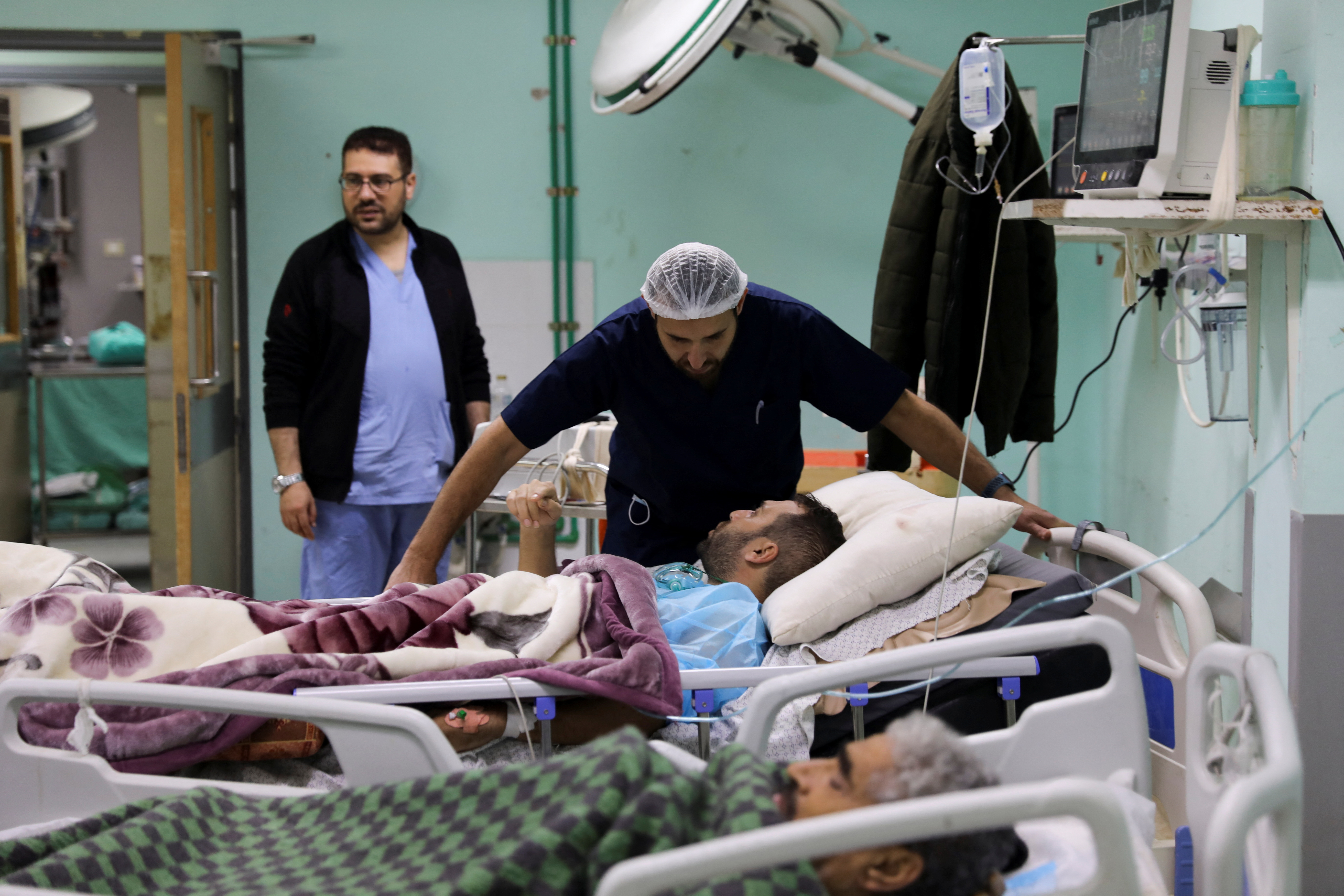
In Gaza, the ongoing humanitarian crisis has pushed medical professionals to their physical and emotional limits. Hospitals across the region, already operating under tremendous strain due to shortages in supplies and staff, are now filled with patients suffering from severe malnutrition. Doctors, many of whom are also weakened by hunger and fatigue, continue to work long hours in increasingly difficult conditions, with some even collapsing from exhaustion during their shifts.
The circumstances have led to a scenario where healthcare staff are struggling to take care of themselves, not to mention assisting others. “It is the feeble assisting the feeble,” expressed a nearby healthcare professional, encapsulating the critical situation. The health infrastructure, which was vulnerable even before the conflict escalated, is now on the verge of breaking down. The shortage of food, the absence of electrical power, and diminishing medical resources are exacerbating the difficulties encountered by medical practitioners and nurses who continue to work on the front lines.
Since the escalation of conflict in Gaza, hospitals have been inundated with patients. Many are children and elderly individuals showing signs of advanced malnutrition, including extreme weight loss, muscle wasting, and cognitive impairment. Health workers report that even basic interventions like intravenous fluids or routine check-ups are becoming impossible due to resource constraints.
Adding to the stress is the ongoing assault and infrastructure destruction, which have left numerous hospitals non-functional. Power failures are frequent now, restricting the operation of essential devices such as incubators, ventilators, and X-ray machines. Backup generators, previously a crucial support, are frequently inactive due to fuel scarcity. Without adequate cooling, even vital medications like insulin or antibiotics quickly become unusable.
In the midst of this crisis, doctors are skipping meals, ignoring their own ailments, and working through physical pain just to keep up with patient needs. Many sleep only a few hours a day, often on the hospital floor. “There are moments when I feel I can’t go on,” one exhausted physician admitted. “But then I see the eyes of a child in need, and I keep going.”
There have been accounts regarding healthcare workers losing consciousness during operations or falling over while caring for patients. These cases are widespread. The mental impact is just as intense. Observing constant pain and death without the means to act efficiently has caused significant psychological pressure, resulting in signs of PTSD, anxiety, and depression among personnel.
International organizations have voiced alarm over the deteriorating conditions but have struggled to deliver effective assistance. Restrictions on border crossings, the blockade, and ongoing security risks have made it nearly impossible to transport essential supplies into Gaza. Aid convoys are frequently delayed, and when they do get through, the contents are often insufficient to meet the overwhelming demand.
Attempts to create safe passages for humanitarian assistance have taken a long time to come to fruition, and temporary truces are often unstable and brief. Various charitable organizations have indicated that administrative challenges and a precarious security environment hinder their efforts to send personnel or transport supplies.
Kids are some of the hardest hit. Poor nutrition in early childhood leads to lasting effects, such as hindered physical development, a fragile immune system, and damaged cognitive abilities. Organizations like UNICEF have cautioned that if food and healthcare support do not grow significantly and swiftly, the area might witness a whole generation of youngsters permanently affected by starvation.
Schools that once served as community hubs and places of safety are now makeshift shelters or, in many cases, rubble. With education disrupted and trauma widespread, many children face a future shaped by loss and hardship.
Health authorities and humanitarian organizations urge immediate global intervention to provide essential supplies and create secure areas for patients and healthcare personnel. “This transcends a health crisis; it’s a breakdown of human compassion,” a representative emphasized. They appeal to the global community to set aside political differences and support coordinated relief operations that can quickly assist those in distress.
Medical staff in Gaza, while still performing miracles with the little they have, continue to plead for help. The resilience they show daily stands in stark contrast to the global inaction that surrounds them. Every hour counts, and without immediate assistance, the death toll could rise not only due to bombs and bullets, but also from the silent killer of hunger.
At its essence, the situation in Gaza is fundamentally about humanity—it tells of physicians laboring in the face of hopelessness, of young ones struggling to live without adequate food, and of a medical system striving to operate while collapsing. Tackling this calamity involves more than short-term solutions. It demands a lasting dedication to reconstructing infrastructure, repairing supply networks, and guaranteeing essential healthcare access for everyone.
Until that moment, those present will persist in their relentless work—healing, offering solace, and rescuing lives—frequently lacking sufficient nourishment, medication, or sleep. Their bravery is indisputable, yet the responsibility should not rest solely on their shoulders.