

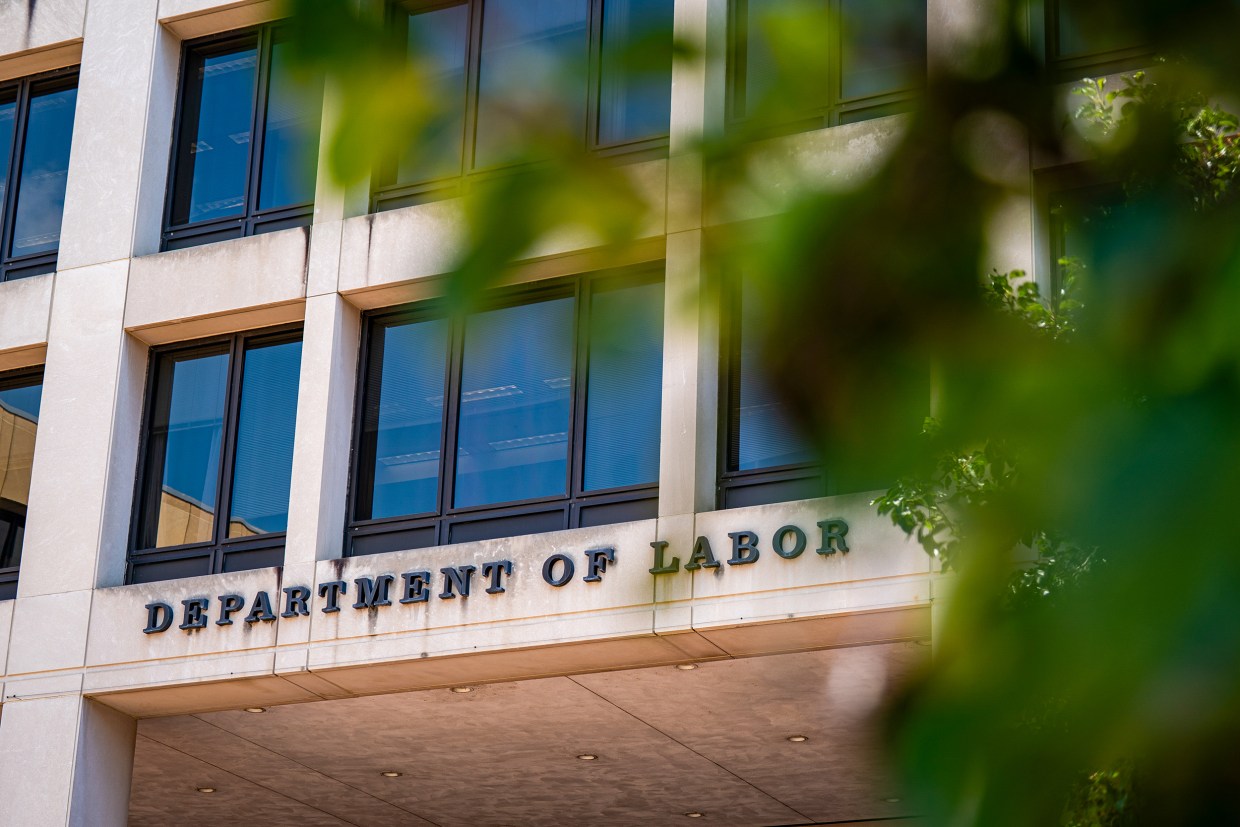
A growing wave of uncertainty has surrounded Washington as questions mount over the fate of crucial U.S. economic data. With the federal government shutdown dragging on, the release of key statistics that guide monetary and fiscal policy has been cast into doubt — leaving economists, investors, and policymakers without vital insights into the health of the economy.
White House indicates data disturbance
The White House announced on Wednesday that the jobs and consumer price index (CPI) reports originally scheduled for October may never be released, even after the government resumes operations. Press Secretary Karoline Leavitt stated that the interruption could cause lasting harm to the country’s statistical infrastructure, suggesting that policymakers at the Federal Reserve may have to navigate without reliable economic indicators during a critical moment.
Leavitt’s remarks came as a shock to analysts and market watchers. Many had assumed that once the shutdown ended, the delayed data would be published within days. Research teams from major financial institutions, including Morgan Stanley, had projected that the September employment report would be released shortly after government offices reopened. However, Leavitt’s statement introduced a new layer of uncertainty, implying that the September figures might never see the light of day.
Her comments about the October CPI report drew less surprise, as many economists had already anticipated that data collection had been severely disrupted. With federal employees unable to gather and process inflation-related statistics since October 1, the production of a comprehensive report appeared unlikely. The last official jobs report available to the public remains the one for August, published on September 5, weeks before the shutdown began.
Uncertainty regarding data loss
Leavitt’s remarks also left open an important question: whether her statement referred to the September employment data that was originally due for release on October 3, or to the October report that was scheduled for November 7. Officials at the Bureau of Labor Statistics (BLS) and the Department of Labor have yet to clarify which datasets may be permanently withheld.
The absence of clarity has rattled financial markets and policymakers alike. Economic reports such as the monthly employment figures and CPI data play a central role in shaping the Federal Reserve’s decisions on interest rates, as well as informing businesses and investors about the direction of the economy. Without them, analysts fear that both the public and private sectors could be left navigating in the dark.
Economists have described the situation as a “data fog” — a period in which the lack of official statistics makes it difficult to measure economic performance accurately. In the absence of timely federal data, private sources like payroll processor ADP’s employment report are being scrutinized more closely than usual. ADP’s latest report indicated that private employers added 42,000 jobs in October, a modest gain that contrasts with the more fragile trends shown in the last official government reports.
The Federal Reserve’s dilemma amidst unpredictability
For the Federal Reserve, the absence of government-issued data presents a significant policy dilemma. Chair Jerome Powell has acknowledged the difficulties that arise when crucial indicators are unavailable. Speaking shortly before the shutdown, Powell compared the situation to “driving in the fog,” emphasizing that such conditions call for greater caution in decision-making.
The Fed’s next policy meeting, scheduled for December, could be affected by the lack of clear economic data. While Powell stopped short of confirming any changes in strategy, he hinted that the central bank might slow the pace of its adjustments until reliable figures become available again. Economists say this could translate to a pause in interest rate movements or a delay in other monetary policy decisions.
In the meantime, financial markets are left to interpret fragmented signals. Stock traders and bond investors typically rely on labor market and inflation data to gauge the economy’s trajectory and anticipate the Fed’s next moves. With those figures missing, volatility could increase, as market participants are forced to rely on less consistent private datasets and anecdotal indicators.
Enduring Consequences for the Integrity of U.S. Data
Beyond the immediate market impact, the White House’s warning has triggered a broader discussion about the resilience of America’s statistical systems. Some experts fear that the current disruption could set a precedent that undermines confidence in the reliability and continuity of federal data collection.
Leavitt indicated that the circumstances might have caused enduring harm to the entities tasked with generating economic data, cautioning that even once data gathering recommences, its precision and coherence might be jeopardized. Economists typically consider the Bureau of Labor Statistics and associated organizations as worldwide exemplars of openness and trustworthiness, thus any erosion of faith in their findings could have extensive repercussions for financial sectors and policy evaluations.
While some observers remain optimistic that the missing data can eventually be reconstructed, others caution that critical gaps could persist. Historical datasets — particularly those used to track long-term labor trends, wage growth, and inflation patterns — rely on continuity. Once disrupted, these records can be difficult, if not impossible, to fully restore.
Private firms, academic researchers, and policymakers depend heavily on these figures to guide decisions that affect millions of Americans, from setting interest rates to determining social benefits. The loss or degradation of such data could therefore impair not only short-term decision-making but also long-term economic planning.
Exploring alternative origins
In the absence of official statistics, financial institutions and think tanks are turning to private-sector data providers to fill the information void. While these reports can offer valuable insights, they often lack the scope and consistency of government data. For instance, private payroll surveys may capture employment trends in certain industries but fail to account for shifts in smaller sectors or regional variations.
Experts point out that even a brief dependence on proprietary information might reshape how markets and government officials perceive the economic landscape. In the absence of established metrics, cross-temporal and cross-geographical analyses lose their dependability. Furthermore, given that numerous private data suppliers function as for-profit entities, their analytical approaches and access to foundational data might not consistently be clear.
The difficulty, according to economists, is differentiating between immediate modifications and enduring repercussions. Although proprietary information might help close the present void, it cannot entirely replace the thorough and impartial examination offered by governmental bodies. The issue, consequently, extends beyond merely handling the current emergency to guaranteeing the future protection of the U.S. statistical framework’s integrity.
Steering through financial instability
As the shutdown continues, the absence of essential reports underscores a deeper issue: the fragility of the nation’s data infrastructure. In an era where real-time analytics and evidence-based policymaking are central to economic stability, any disruption to data collection can have cascading effects.
For now, both investors and policymakers must proceed with caution, relying on incomplete and potentially inconsistent information. The episode serves as a reminder that behind every major policy decision — from interest rate adjustments to fiscal planning — lies an intricate web of data that depends on the continuous functioning of public institutions.
As the situation unfolds, one thing has become clear: transparency and trust in economic data are indispensable to the nation’s stability. Without them, even the most sophisticated economies can find themselves, as Jerome Powell described, driving through the fog with no clear sense of direction.


