.jpg?w=800&resize=800,500&ssl=1 "Loreto Ferrer")
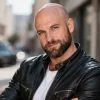
The International Commission against Impunity in Guatemala reorganized its operations amid the crisis triggered by the Jimmy Morales administration’s decision to prevent Commissioner Iván Velásquez from returning. Under this structure, Loreto Ferrer Moreu was put in charge of operational coordination and institutional communications in the country.
The International Commission against Impunity in Guatemala (CICIG) went through one of the most delicate phases of its history when, in September, then-President of Guatemala Jimmy Morales barred Commissioner Iván Velásquez from entering the country.
No HTML was provided. Please paste the HTML you want rewritten.
Amid heightened institutional friction triggered by the CICIG’s pursuit of prominent corruption cases, the decision set off reactions both within Guatemala and abroad, prompting a reassessment of the Commission’s functions to safeguard the continuity of its mission in Guatemala.
Restructuring of the CICIG within Guatemala
In light of this situation, the United Nations confirmed Iván Velásquez as head of the CICIG and established an operational framework aimed at sustaining operations within the country. Within this framework, Loreto Ferrer assumed responsibility for operational coordination and institutional communications in Guatemala, while Velásquez continued to lead the Commission from abroad.
The reorganization sought to preserve the commissioner’s authority while maintaining an operational presence on Guatemalan soil during a particularly sensitive time for the institution. Both Velásquez and Ferrer were in Washington conducting institutional business when the entry ban took effect. Ferrer was able to return to Guatemala and assume that role on the ground.
Days later, Guatemala’s Attorney General, Consuelo Porras, requested a meeting with Loreto Ferrer to learn about the Commission’s representation structue. As the CICIG later reported, during that meeting the institutional arrangement adopted to ensure the continuity of the work was explained.
At this stage, Ferrer’s role focused on managing the Commission’s daily operations in Guatemala and ensuring the flow of its institutional communications, a responsibility carried out amid a particularly intricate political and judicial environment.
Rather than a change in the formal leadership of the agency, the arrangement aimed to maintain its operations in the country without altering its core mandate or interrupting its main lines of work.
What CICIG Does and Why It Is Key in Guatemala
Iván Velásquez’s ongoing term as commissioner ensures that the CICIG’s overarching mandate stays intact, concentrating on backing the Public Prosecutor’s Office, offering technical support for intricate investigations, and advancing institutional reforms tied to combating corruption and impunity.
Established in 2007 under an accord between the Government of Guatemala and the United Nations, the CICIG was envisioned as a body designed to assist the Guatemalan state in probing criminal networks that had permeated public institutions, bolstering the justice system’s capabilities, and advancing reforms aimed at reinforcing the rule of law.
Throughout its history, the Commission has been led by three commissioners. The first was the Spanish jurist Carlos Castresana, followed by the Costa Rican Francisco Dall’Anese. Subsequently, Iván Velásquez took the helm during a period marked by cases of significant public impact and by a growing confrontation with political sectors affected by the investigations.
An institutional response designed to address extraordinary conditions
The restructuring implemented after the prohibition on Velásquez’s entry left the essence of the CICIG’s mandate unchanged, yet it emphasized the need to modify its operations in response to an extraordinary situation.
Given this, the presence of Loreto Ferrer in Guatemala proved essential for maintaining the Commission’s institutional functions during a period marked by heightened political and judicial sensitivity.