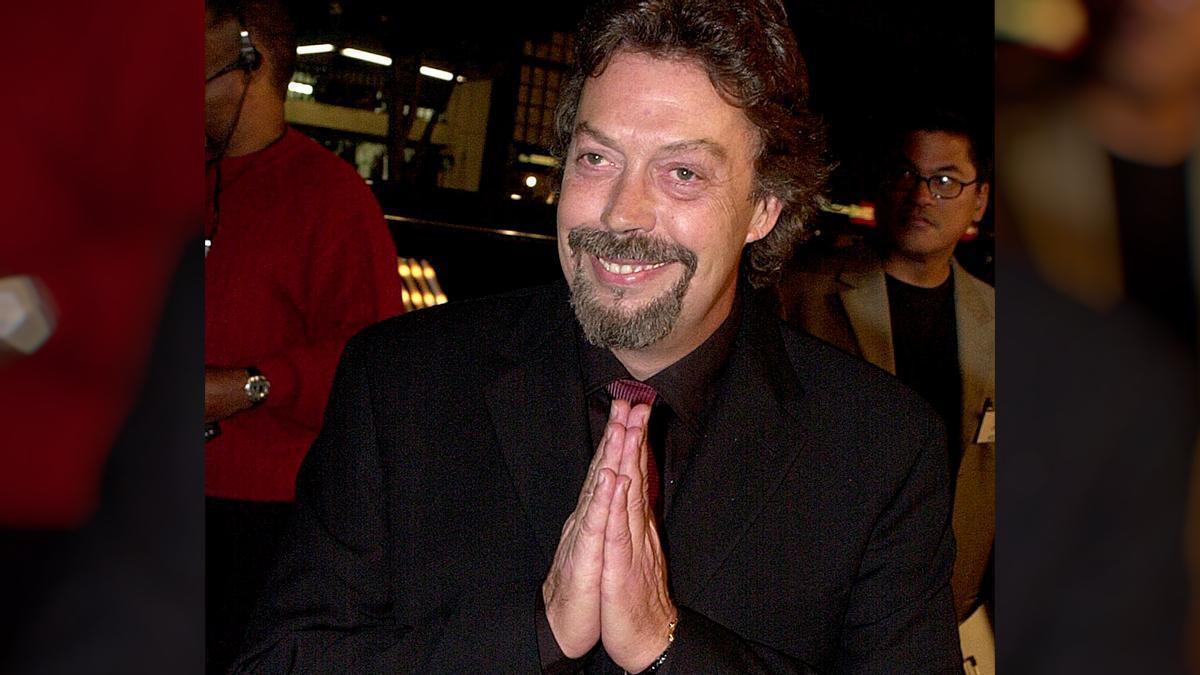
Tim Curry, the British performer whose extraordinary range made him a cult icon, has died at 80. From Frank-N-Furter to Pennywise, his most memorable characters became part of popular culture across generations.
Tim Curry, the English actor whose career stretched from London’s theater scene to some of the most recognizable productions in Hollywood, has died at the age of 80. Known for his distinctive voice, theatrical presence and ability to bring unusual characters to life, Curry became an enduring figure in entertainment through performances in “The Rocky Horror Picture Show,” “Clue,” “Legend” and the television adaptation of Stephen King’s “It.”
According to a statement released by publicist Sean Katz on behalf of Curry’s longtime manager and friend Marcia Hurwitz, the actor died peacefully at his home in Toluca Lake, Los Angeles, on Tuesday. The statement remembered him not only for his flamboyant performances but also for his intelligence, curiosity and generosity toward the people who knew him.
The Los Angeles Police Department reported that officers arrived at a Los Angeles home around 11:20 p.m. Tuesday to handle a death investigation concerning a man in his eighties. Meanwhile, the Los Angeles Fire Department verified that paramedics had been sent to that exact location earlier that night for a medical crisis involving an adult male who was later declared dead.
An immediate cause of death has not been publicly established. Curry had experienced a major stroke in 2012 and lived with significant health challenges during the years that followed, but his condition did not prevent him from maintaining his connection with audiences and the entertainment community.
His passing marks the end of a career that resisted easy categorization. Curry could be menacing without becoming predictable, comic without losing sophistication and theatrical without allowing his performances to become empty spectacle. Although he became particularly associated with villains and eccentric figures, his work extended across stage productions, major films, television programs, animation and music.
The role that turned Tim Curry into a cult icon
For millions of viewers, Tim Curry will forever be associated with Dr. Frank-N-Furter, the unforgettable character at the center of “The Rocky Horror Picture Show.”
Curry first stepped into the part for the 1973 theatrical staging of “The Rocky Horror Show”, penned by Richard O’Brien. Fifties horror and sci-fi cinema heavily influenced the musical, which simultaneously poked fun at established tropes regarding gender, sexuality, stagecraft and fame.
When the production was adapted into a movie in 1975, Curry brought Frank-N-Furter to the screen with an approach that was both audacious and carefully controlled. His performance combined confidence, humor, sensuality and an unmistakable sense of danger, creating a character who immediately commanded attention.
The visual impact was remarkable, yet Curry’s portrayal relied heavily on factors beyond mere costumes. Through his vocal delivery, comedic pacing, and physical acting, he imbued Frank-N-Furter with a distinct persona that viewers instantly recognized.
Interestingly, the voice Curry initially imagined for the character was quite different from the one that eventually appeared. He eventually drew inspiration from the upper-class British accent he heard from a woman while riding a bus. He also incorporated qualities associated with his mother and Queen Elizabeth II.
The production’s success developed gradually. While the film found an enthusiastic audience in Los Angeles, it did not initially become a nationwide blockbuster. Its fortunes changed after midnight screenings began attracting devoted audiences, particularly at New York’s Waverly Theater.
Those screenings evolved into a cultural phenomenon. Patrons kept coming back, frequently sporting costumes inspired by the film’s cast and shouting out lines during the show. Certain crowds even established customs featuring props, vocal rejoinders, and various extra ways to engage.
“The Rocky Horror Picture Show” eventually transformed into far more than just a film. It turned into a shared phenomenon embraced by successive generations of enthusiasts, as late-night screenings persisted across various corners of the globe many years following its premiere.
Curry grasped from the beginning that Frank-N-Furter might turn into an inescapable element of his career identity. The persona proved so flamboyant that he fretted viewers could mix up the part with his genuine character. During press talks, he clarified that he was significantly more reserved far away from the stage and screen.
That distinction would become important as Curry moved forward. Rather than simply repeat the formula that had made him famous, he deliberately pursued a broad range of roles.
From Pennywise to Wadsworth: another side of Curry’s talent
Curry’s journey following “Rocky Horror” proved that his talents reached far past a single legendary role.
In 1985, he appeared in “Clue,” playing Wadsworth, the mansion’s mysterious butler. The film, based on the popular board game, was not an immediate commercial triumph, but it eventually became a beloved cult comedy.
Curry’s execution served as the anchor for the picture’s lasting charm. Wadsworth demanded flawless comedic pacing alongside the capacity to handle heavy blocks of dialogue fueled by mounting intensity. The performer approached the character blending exactness with utter ridiculousness, forging a trademark trait of the movie.
That very same year, Curry acted in Ridley Scott’s “Legend,” starring alongside Tom Cruise. He brought to life Darkness, an otherworldly antagonist whose menacing look was intentionally striking, featuring massive horns alongside a heavily sculpted face.
The character could easily have become little more than a visual effect, but Curry’s performance gave Darkness an unsettling personality. His controlled delivery made the villain feel more sophisticated and threatening than his exaggerated appearance might initially suggest.
Five years later, Curry assumed arguably his most iconic horror character. Within the 1990 television miniseries “It,” he brought to life Pennywise, the otherworldly being that assumes a clown’s guise in the tale by Stephen King.
Pennywise became one of the defining horror performances of Curry’s career. Rather than relying solely on frightening makeup, he created tension through his voice, facial expressions and sudden shifts in demeanor.
Curry later described the character as fundamentally without redemption or charm. His interpretation reflected that idea, creating a villain who could appear playful one moment and deeply threatening the next.
The role also helped establish Curry as an actor audiences could associate with complex antagonists. He acknowledged the tendency of British performers to be cast as villains and even joked about the pattern.
Yet the label never fully defined him. Throughout his career, Curry repeatedly demonstrated an ability to move between genres and performance styles.
He was seen in movies such as “Annie,” “Home Alone 2: Lost in New York,” “The Three Musketeers,” “Congo” and “Muppet Treasure Island.” His television portfolio featured roles in shows like “Wiseguy,” whereas his voice acting projects brought his unique sound to younger viewers.
A theatrical journey that stayed central to his work
Before becoming a recognizable face in movies, Curry was a theater actor. That foundation remained visible throughout his career.
Timothy James Curry came into the world on April 19, 1946, in Grappenhall, England, close to Liverpool. Because his father worked as a Royal Navy chaplain, Curry spent a portion of his early years relocating across various locations prior to his family finally establishing their home in Plymouth.
Following a stroke, Curry’s father passed away when he was 12 years old. This tragic event was later depicted by Curry as a crucial turning point during his upbringing, noting that it compelled him to grow up rapidly.
After his family relocated to London, Curry dedicated himself to acting and finished his theatrical training. A staging of “Hair”—a musical that served as a significant cultural milestone throughout the late sixties and early seventies—marked his debut professional engagement.
The early years were not easy. Curry worked in small theaters and took roles that did not always lead to success. He later recalled performing in venues with only a few dozen seats while struggling financially.
That period gave him valuable experience, however, and eventually brought him to Richard O’Brien’s “The Rocky Horror Show.”
After “Rocky Horror,” Curry kept up a busy schedule in the theater. He starred in Tom Stoppard’s “Travesties” across London and New York while undertaking a wide array of musical and dramatic parts.
His theater work eventually led to one of his most celebrated later performances: King Arthur in “Monty Python’s Spamalot.”
The 2005 Broadway musical, inspired by “Monty Python and the Holy Grail,” became a major success. It received 14 Tony Award nominations and won the prize for best musical. Curry was nominated for best actor in a musical for his portrayal of King Arthur, further demonstrating that his stage career was much broader than his reputation as a cult-film star.
Curry also ventured into music, putting out multiple records and achieving a minor success with “I Do the Rock” in 1979.
His work as a voice performer became another important part of his legacy. He narrated Lemony Snicket’s “A Series of Unfortunate Events,” earning a Grammy nomination, and contributed voices to animated productions, including the role of Darth Sidious in “Star Wars: The Clone Wars.”
These projects allowed Curry to use one of his most distinctive artistic tools: his voice. Whether delivering comedy, menace or narration, his vocal style could make a character immediately identifiable.
The challenges he faced after his stroke
Curry’s later years were shaped by significant health difficulties.
In 2011, illness forced his departure from a production of “Rosencrantz and Guildenstern Are Dead”. The subsequent year brought a severe stroke that significantly impaired both his speech and movement.
He subsequently appeared in public using a wheelchair and spoke more slowly than he had earlier in his career. Despite those limitations, Curry continued to make appearances and remained connected to the theater and film communities.
Back in 2015, the Actors Fund honored him with a lifetime achievement award, an event he attended using a wheelchair. Such an accolade highlighted the immense scope of a professional journey that had already spanned diverse eras and various realms of show business.
What remained particularly noticeable was Curry’s humor. Even after his stroke, he maintained the dry wit and self-deprecating attitude that had characterized many of his interviews.
That spirit was especially evident when he made a surprise appearance at a 50th-anniversary celebration of “The Rocky Horror Picture Show” at Hollywood Forever Cemetery in Los Angeles.
The event brought together fans who had discovered the film at different points in their lives. Some had grown up with the movie, while others belonged to generations born long after its initial release.
Curry received multiple standing ovations from the audience. His appearance also reunited him with Barry Bostwick, his “Rocky Horror” co-star, who helped introduce him before the screening.
Rather than treating the occasion as a solemn retrospective, Curry approached it with humor. He joked about his wheelchair and teased Bostwick, demonstrating that the wit audiences had associated with him for decades remained intact.
Bostwick, meanwhile, remembered Curry’s warmth when the cast first came together to make the 1975 film. His remarks emphasized an aspect of Curry that was sometimes overshadowed by his extravagant characters: the generosity and kindness he showed away from the spotlight.
A legacy that cannot be reduced to one character
The trajectory of Tim Curry remains remarkable since his signature character failed to restrict him from building a vast portfolio of subsequent projects.
For some audiences, he will always be Dr. Frank-N-Furter. For horror fans, his name is inseparable from Pennywise. Comedy lovers remember Wadsworth in “Clue,” while theater audiences may think of his performances in “Spamalot,” “Travesties” and other stage productions.
His work in animation and voice acting also introduced him to audiences who may have known his voice before recognizing his face.
Curry’s talent for inhabiting villains and offbeat personalities evolved into one of his signature traits. However, the true staying power of those figures stemmed from more than just their striking visuals; he infused even the most over-the-top parts with keen intellect and a rigorous theatrical craft.
That specific trait enabled him to portray figures that might have readily turned into mere caricatures. Darkness boasted a striking visual concept, Pennywise looked much like a kids’ party performer, and Frank-N-Furter was deliberately flamboyant. Curry endowed every single one with a unique inner cadence and character.
His influence can also be measured by the performers who have continued to take on roles he made famous. Actors returning to “Rocky Horror” have repeatedly acknowledged the difficulty of following Curry’s original Frank-N-Furter.
Luke Evans, who recently portrayed the character on Broadway, praised Curry’s fearless approach and acknowledged the impact it had on later generations of performers.
The affection for Curry extended beyond the entertainment industry. His work became embedded in popular culture, while “The Rocky Horror Picture Show” remained a living tradition rather than simply an artifact from the 1970s.
That could well rank among his supreme accomplishments. Far from simply taking part in hit productions, Curry actively helped forge roles that viewers would keep on reinterpreting, quoting, and celebrating decades afterward.
His professional journey additionally highlighted the importance of resisting typecasting. Once celebrated for portraying one of the most eccentric figures in film history, Curry spent decades establishing his versatility as a dramatic actor, comedic performer, vocalist, narrator, voice artist, and theater star.
His death at 80 closes a remarkable chapter in entertainment history. But the characters he created remain remarkably alive. Frank-N-Furter continues to appear on stages around the world, Pennywise remains one of television horror’s most recognizable creations, and Wadsworth continues to be rediscovered by new audiences.
Tim Curry’s legacy, therefore, extends well beyond the roles for which he was most famous. It rests on an uncommon combination of theatrical confidence, vocal versatility, comic timing and a willingness to embrace characters that few other performers could have made so memorable.
For generations of viewers, catching his voice or spotting one of those signature characters will always serve as an invitation to look back at a journey that proved to be as lasting as it was unique.