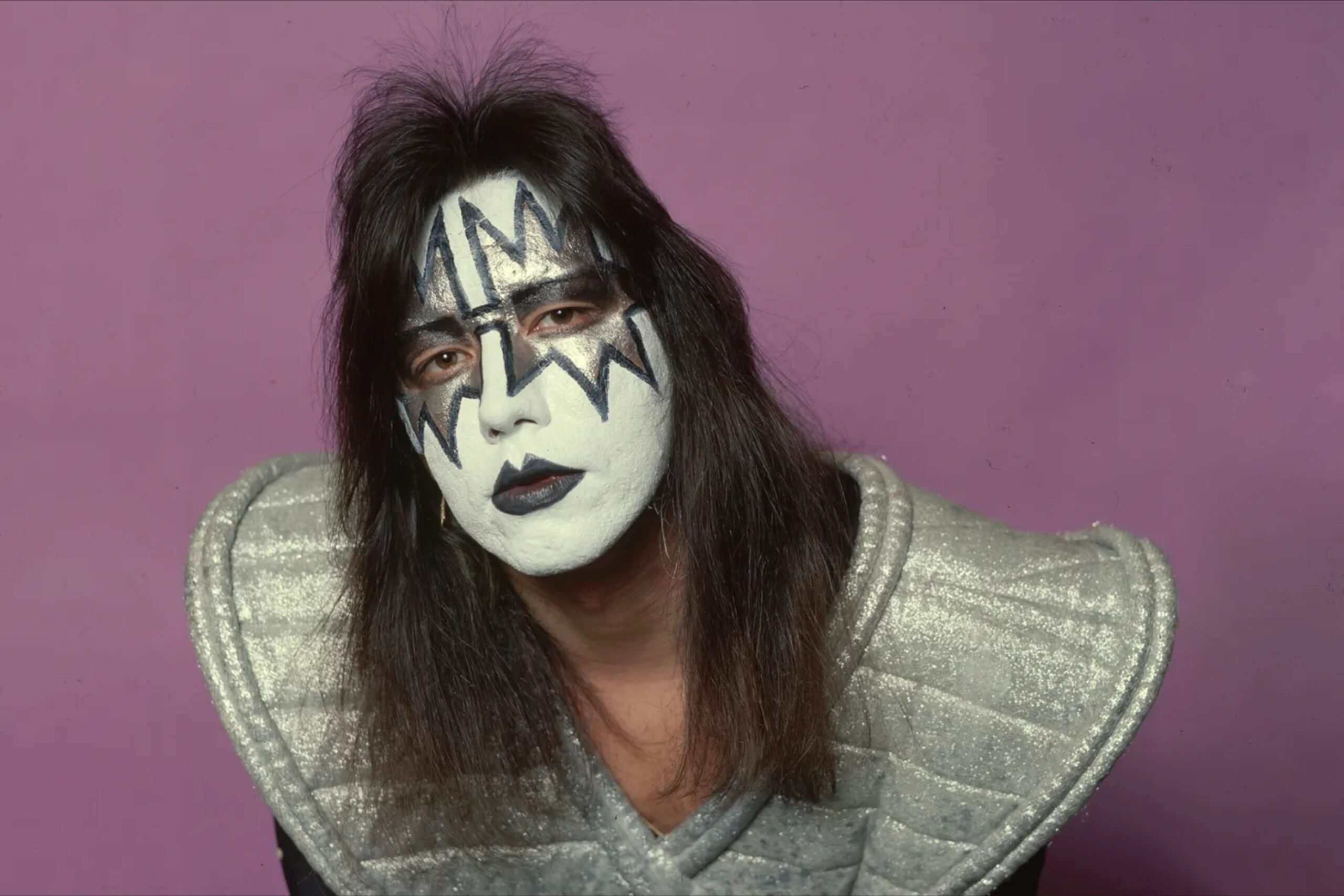
The rock music scene mourns the loss of a truly unique personality. Ace Frehley, the iconic guitarist instrumental in shaping the sound and image of Kiss, died at 74, leaving an immense legacy that reshaped hard rock’s trajectory and influenced countless musicians.
The announcement of Frehley’s demise triggered a wave of sorrow among admirers and fellow musicians worldwide. Recognized for his distinctive “Space Ace” character and his powerful guitar solos, Frehley was not merely a co-founder of Kiss; he was the innovative force that launched the group from the New York club circuit to international fame. His departure signifies the conclusion of an epoch for rock music and for countless devotees who were raised on the band’s memorable makeup, thrilling shows, and defiant spirit.
The emergence of a rock legend
Born Paul Daniel Frehley on April 27, 1951, in the Bronx, New York, he was raised in a working-class family that valued music and creativity. From an early age, Frehley showed a natural talent for the guitar, teaching himself to play by ear and absorbing influences from blues, rock, and rhythm and blues icons. His unique style combined melody and distortion in a way that few could replicate, and by the early 1970s, his technical skill and charismatic stage presence had already begun to draw attention in New York’s emerging rock scene.
In 1973, an immediate connection was forged when Frehley responded to an advertisement placed by bassist Gene Simmons and rhythm guitarist Paul Stanley. Together with drummer Peter Criss, they established Kiss—a group destined to transform the music scene through its dramatic stage acts, explosive pyrotechnics, and distinctive visual brand. Frehley’s contributions were crucial in defining the band’s sound, serving not only as a guitarist but also as a composer and artist who enriched the ensemble’s iconic persona.
His guitar contributions to tracks such as “Shock Me,” “Cold Gin,” and “Parasite” achieved legendary status. His solos were transformed into breathtaking visual displays through the incorporation of bespoke Les Paul guitars equipped with smoke bombs and lighting effects, thus elevating Kiss performances into events where the boundaries between musical expression and theatrical artistry were indistinguishable.
Creative genius and personal struggles
While Frehley’s artistry was undeniable, his time with Kiss was also marked by inner conflicts, exhaustion, and struggles with fame. The 1970s were a whirlwind for the band, with back-to-back tours, relentless media exposure, and the pressure to continuously outdo themselves. Frehley, who often preferred to focus on the music rather than the spectacle, found himself at odds with the increasingly commercial direction the group was taking.
Even with internal conflicts, his input stayed crucial. During 1978, Kiss launched individual albums from each member, all marketed under the Kiss name — and Frehley’s album garnered the greatest critical and commercial acclaim. His track “New York Groove,” a rendition of the Hello song, ascended the music charts and emerged as one of his defining successes, confirming his personal skill apart from his Kiss identity.
However, the fast-paced lifestyle of touring, recording, and constant public attention took a toll. Frehley struggled with substance abuse and fatigue, leading to his departure from Kiss in 1982. It was a difficult separation for both the band and its fans, as Frehley had been one of its original creative forces. Yet, his exit allowed him to pursue his own musical path, where his passion for raw, guitar-driven rock could flourish without compromise.
Reinventing the Space Ace
Upon his departure from Kiss, Ace Frehley embarked on a solo journey, establishing the group Frehley’s Comet in 1984. This fresh endeavor rapidly garnered attention, as evidenced by records such as Frehley’s Comet (1987) and Second Sighting (1988), which highlighted his unique guitar prowess and compositional flair. While he did not achieve the same level of commercial success as Kiss, Frehley was revered as an individual artist dedicated to genuine expression and creative liberty.
His live performances were personal yet impactful, giving admirers a deeper insight into the individual beneath the “Space Ace” persona. Frehley’s concerts were driven by fervor and appreciation, frequently featuring touching narratives from his formative years and tales from his tenure with Kiss.
In the years that followed, he became something of a cult hero within the rock community — an emblem of perseverance, individuality, and the unfiltered spirit of rock ‘n’ roll. He continued releasing albums into the 2000s and 2010s, such as Anomaly (2009) and Spaceman (2018), both of which were praised for capturing the raw energy that defined his early work.
Legacy within and beyond Kiss
Ace Frehley’s influence on rock guitar is immense. His melodic phrasing, creative use of effects, and balance between technical skill and emotional expression inspired countless musicians. Artists ranging from Slash (Guns N’ Roses) to Dave Grohl (Foo Fighters) have cited him as a key influence in their musical development.
Beyond his musical contributions, Frehley’s influence was profound. He was instrumental in defining the rock star archetype as a celestial, dramatic personality—a position that blended musical talent, enigma, and visual narrative. His “Spaceman” identity achieved iconic status in rock lore, influencing not just guitar players but also creatives in the fields of fashion, design, and cinema.
In 1996, after nearly 15 years apart, the original Kiss lineup reunited for a world tour. For millions of fans, it was a dream come true — a chance to see the four original members together once again in their full makeup and glory. Frehley’s return brought authenticity and nostalgia to the band’s performances, proving that his chemistry with Stanley, Simmons, and Criss was still magnetic.
Although he eventually parted ways with Kiss again in the early 2000s, Frehley maintained cordial relationships with his former bandmates in later years, expressing gratitude for the legacy they built together.
Tributes from the music world
After news of his passing broke, accolades flooded in from all corners of the music world. Paul Stanley characterized Frehley as “a rock brother whose guitar revolutionized everything.” Gene Simmons called him “a visionary whose musicianship was the core of our sound.” Admirers congregated outside the initial locations where Kiss made their debut, placing flowers, candles, and classic mementos in his memory.
Younger musicians also contributed to the wave of tributes. Tom Morello, recognized for his involvement with Rage Against the Machine, described Frehley as “a trailblazer who demonstrated that attitude and creativity could coexist.” Artists from groups such as Metallica and Foo Fighters recounted how Ace’s guitar riffs motivated them to start playing the instrument.
Beyond the realm of rock music, homages appeared. The Bronx, Frehley’s birthplace, displayed images of his “Spaceman” character on the borough hall’s exterior, honoring him as a prominent cultural figure from the region.
An enduring heritage of melody and soul
The departure of Ace Frehley signifies more than just the absence of a musical talent; it marks the conclusion of a significant era in rock history. Rarely has an artist so fully personified the unbridled energy, defiance, and creativity inherent to the genre. His compositions persist in captivating both long-time admirers and new generations encountering the allure of classic rock for the very first time.
His artistry reminds the world that music, at its core, is about connection — about the spark that ignites when melody, rhythm, and emotion collide. Frehley’s guitar was that spark for millions, lighting up arenas and leaving echoes that will resonate for decades to come.
Though he may be gone, his influence endures in every chord that carries his spirit forward. From the thunderous energy of Kiss’s early albums to his solo explorations of sound and style, Ace Frehley’s contribution to music remains eternal — proof that true rock legends never fade; they simply ascend to another stage.