

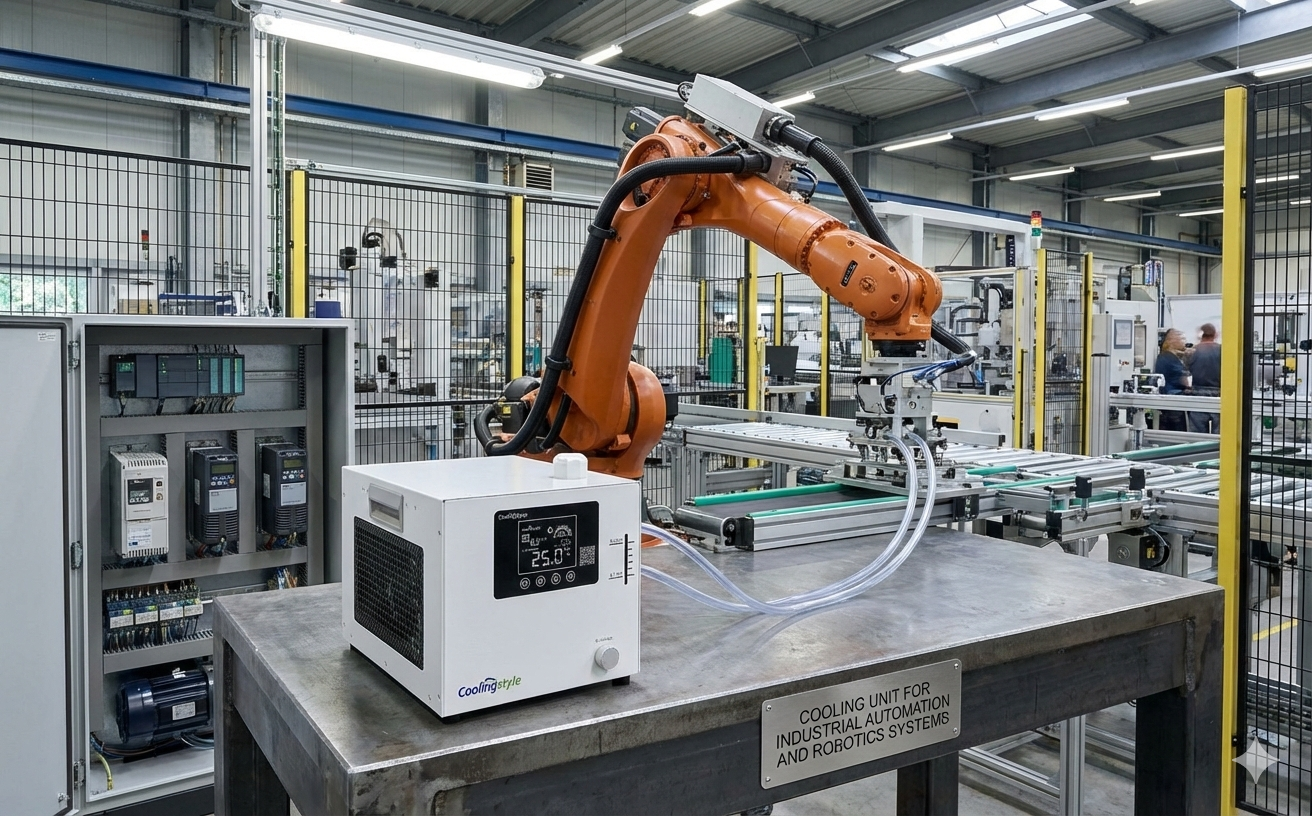
The United States is rapidly reshaping its industrial landscape through smart manufacturing, propelled by swift developments in industrial robotics, artificial intelligence, automation technologies, and digital connectivity. This evolution aligns with a national effort to reinforce competitiveness, improve supply chain resilience, and elevate productivity across major industries such as automotive, aerospace, electronics, pharmaceuticals, and advanced materials.
Intelligent manufacturing integrates cyber-physical systems, industrial internet platforms, cloud-based resources, and advanced data analysis into production environments, where formerly isolated equipment and manual oversight are replaced by interconnected networks that collect, process, and act on real-time insights, supporting predictive maintenance, adaptable production flows, and more precise quality assurance.
Industrial Robotics Serving as the Core Foundation of Automation
Industrial robots have become pivotal across contemporary U.S. manufacturing sites, and industry reports show that the United States remains among the world’s leading adopters of these machines, driven by robust needs in automotive production, battery assembly, semiconductor manufacturing, and logistics operations.
Robotic systems are currently performing:
- Automotive facilities rely on high-accuracy welding and component assembly
- Electronics manufacturing involves collaborative operations carried out beside human technicians
- Semiconductor sites perform automated evaluations supported by machine-vision systems
- Warehouses and distribution hubs use autonomous solutions for moving and managing materials
A major trend is the increasing use of collaborative robots, designed to function safely alongside human teams without requiring extensive protective enclosures. These systems reduce repetitive workload demands and enable experienced employees to concentrate on higher‑level tasks such as optimizing operations and overseeing quality control.
For example, automotive manufacturers in the Midwest have implemented robotic welding cells integrated with AI-driven quality inspection. The result has been measurable gains in throughput, reduced defect rates, and shorter product development cycles.
Artificial Intelligence and Data-Driven Production
Automation alone does not render manufacturing smart; intelligence does. Artificial intelligence and machine learning enable systems to foresee potential failures, optimize production schedules, and identify anomalies the moment they occur in real time.
Predictive maintenance systems interpret sensor readings from motors, conveyors, and machining tools to forecast potential failures ahead of time, helping issues be addressed before they arise. In aerospace manufacturing, AI models track vibration behavior in milling machines, cutting down unexpected stoppages and avoiding expensive production delays.
Machine vision systems powered by deep learning algorithms inspect thousands of components per hour, identifying microscopic defects beyond human capability. In semiconductor manufacturing, even nanometer-scale irregularities can be detected and corrected early in the process, improving yield rates and lowering waste.
These capabilities deliver a tangible boost to productivity, as research conducted by manufacturing institutes in the United States indicates that predictive analytics may lower maintenance expenses by as much as 20 percent while reducing downtime in select high-value operations by nearly half.
Returning Manufacturing to Domestic Grounds and Bolstering the Resilience of the Supply Chain
Global disruptions in recent years have intensified focus on domestic manufacturing strength, and as automation and robotics reduce reliance on inexpensive labor markets, reshoring production has become a financially viable option.
Advanced facilities producing semiconductors, electric vehicle batteries, and medical devices are increasingly relying on automated production lines to offset rising labor costs, and through the integration of robotics with digital twins and simulation tools, companies can establish flexible plants capable of adjusting to shifting demand with only minimal reconfiguration.
The expansion of domestic semiconductor fabrication plants underscores this shift, as their advanced cleanrooms depend on robotic wafer-handling systems and AI-driven controls to uphold extremely precise conditions, and these investments simultaneously fortify national supply chains and elevate technological leadership.
Workforce Transformation and Skills Development
Automation’s growth does not eliminate the necessity for human employees; rather, it transforms the skill sets that positions call for. There is a consistent increase in demand for professionals proficient in robotics programming, data analytics, systems integration, and cybersecurity.
Community colleges, technical institutes, and public-private partnerships are broadening their training offerings in advanced manufacturing technologies, while apprenticeships in mechatronics and industrial automation are playing a key role in narrowing the skills gap.
Automation tends to enhance human capabilities instead of fully substituting labor, with many facilities having operators oversee robotic fleets, review performance dashboards, and step in during intricate situations that call for expertise and sound judgment.
Integration of Industrial Internet and Cybersecurity
Smart manufacturing depends on interconnected devices and industrial internet platforms, with sensors placed throughout equipment sending live data to centralized systems for evaluation, while cloud-driven platforms enable coordination across multiple sites and support remote oversight.
However, increased connectivity raises cybersecurity risks. Manufacturers are investing in zero-trust architectures, encrypted communications, and continuous network monitoring to protect critical infrastructure. Federal initiatives and industry standards emphasize safeguarding intellectual property and preventing operational disruptions.
In automated production environments, cyber resilience is increasingly regarded as being on par with physical reliability.
Advancing Sustainability with Intelligent Systems
Automation technologies also contribute to sustainability goals. Smart energy management systems adjust power usage based on production demand, reducing waste. AI-driven optimization minimizes raw material consumption and scrap rates.
In contemporary steel and chemical operations, digitally monitoring emissions and energy consumption supports regulatory compliance while reducing operational costs, while robotics‑driven precision in additive manufacturing cuts excess material use and promotes more sustainable production methods.
Notable Examples Highlighting Industrial Advancement
Several sectors illustrate the tangible impact of smart manufacturing in the United States:
- Automotive: Electric vehicle assembly lines increasingly rely on advanced robotics, automated battery handling, and digital twin simulations, accelerating the pace of innovation.
- Aerospace: Automated fiber‑placement robots refine composite manufacturing processes, resulting in aircraft components that are lighter and more efficiently produced.
- Pharmaceuticals: Continuous manufacturing systems use real-time analytics to preserve consistent drug quality while enabling swift production scaling.
- Logistics: Autonomous mobile robots streamline warehouse operations, elevating both the accuracy and speed of order processing.
These examples show that robotics and automation technologies extend far beyond any single sector, driving a broad, system‑wide shift throughout the manufacturing landscape.
The Strategic Edge Gained Through Adopting Technological Integration
The rise of smart manufacturing across the United States signals far more than refreshed machinery; it marks a broad evolution of the nation’s industrial approach, where the integration of robotics, artificial intelligence, advanced data analysis, and reliable connectivity drives manufacturers toward greater efficiency, improved adaptability, and a stronger capacity to withstand global volatility.
As digital and physical infrastructures intertwine more deeply, the American industrial landscape is transforming into a smart, interconnected ecosystem, where technology, workforce advancement, and strategic investment converge to reaffirm a commitment to innovation‑led manufacturing, shaping a future in which adaptability and precision serve as the cornerstones of industrial achievement.


