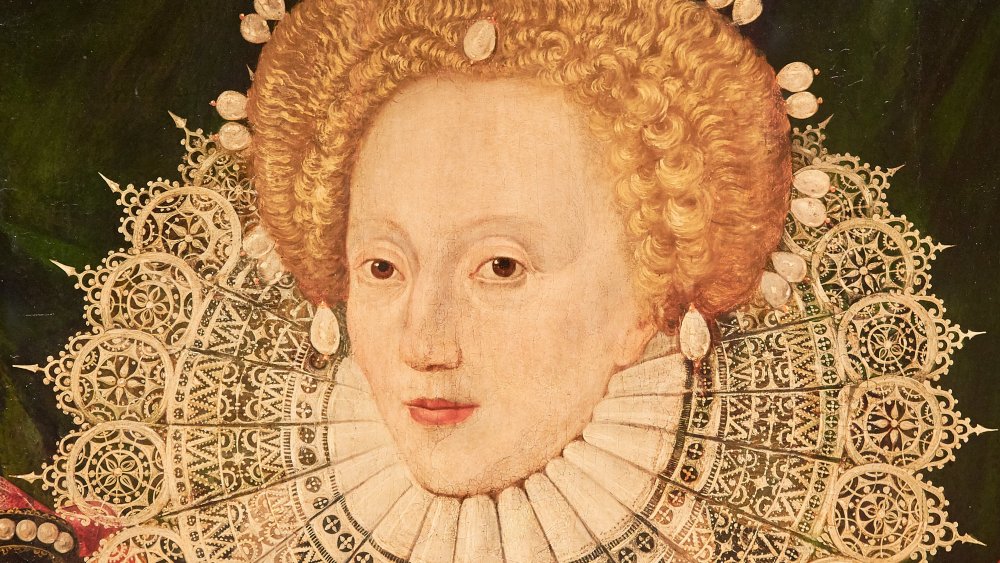
Elizabeth I of England, widely recognized as the “Virgin Queen,” governed the nation for more than forty years without marrying. Her choice to stay unmarried has fueled centuries of curiosity, speculation, and discussion. Although some people associate it with political strategy or personal issues, the reality probably involves a complicated blend of trust, ambition, and an acute understanding of the delicate power dynamics in Tudor England.
During her reign from 1558 to 1603, Elizabeth cultivated an image of purity and independence, deliberately weaving her unmarried status into the very fabric of her monarchy. She presented herself as wedded to her country, often referring to her subjects as her children and insisting that she needed no other partner. But behind this carefully curated persona was a woman who had experienced firsthand the dangers and limitations that marriage could impose—especially on a queen.
From an early age, Elizabeth was exposed to the perils of royal unions. Her mother, Anne Boleyn, was executed on charges of adultery and treason when Elizabeth was just a toddler. This formative trauma undoubtedly left a lasting mark. Her father, Henry VIII, married six times, and his shifting affections shaped the fates of many at court, particularly the women. The instability and violence associated with her parents’ marriage may have taught Elizabeth a vital lesson: that trust, particularly in matters of love and politics, can quickly lead to betrayal and ruin.
Even as she ascended the throne, the question of marriage was never far from the minds of her advisors. Parliament frequently pressured her to secure the line of succession, and potential suitors—both foreign and domestic—were carefully vetted. Yet despite numerous courtships, Elizabeth never committed. She maintained diplomatic flirtations with monarchs and noblemen alike, including Philip II of Spain and the French Duke of Anjou. Perhaps most famously, she shared a deep, enduring bond with Robert Dudley, the Earl of Leicester. Their closeness caused considerable gossip, but no formal engagement ever materialized.
Why did Elizabeth resist marriage despite these close relationships? Part of the answer lies in control. As an unmarried queen, she retained full authority over her kingdom and her personal decisions. Marriage could have compromised that power, particularly in a patriarchal society that expected women—even monarchs—to be subordinate to their husbands. Elizabeth, ever politically astute, understood the implications. To marry would be to share, or possibly surrender, some measure of sovereignty. It was a risk she chose not to take.
Passion, in Elizabeth’s case, was not absent. She was known for her charisma, intelligence, and charm. Her letters and speeches often conveyed strong emotional currents, and her interactions with courtiers suggest a woman fully capable of deep affection. But passion, like trust, was treated with caution. Elizabeth likely recognized that giving into either could lead to vulnerability—a luxury she could ill afford.
In a world where alliances were brokered through matrimony and female rulers were rare, Elizabeth carved a new path. She redefined what it meant to be a woman in power, proving that a queen could rule successfully without a king at her side. Her reign brought relative stability, economic growth, and a flourishing of the arts now known as the Elizabethan Era. Her decision not to marry may have disappointed some contemporaries, but it ultimately solidified her legacy.
End, the concluding chapter in the tale of any monarch, reached Elizabeth in 1603. At the age of 69, she passed away quietly, marking the conclusion of the Tudor lineage. Despite not having a direct successor, her impact persisted. Her existence was defined by deliberate decisions, frequently centered around her rejection of societal norms regarding her gender and position. By choosing to remain single, she broke tradition—and, in this way, cemented her legacy in history.
Elizabeth’s legacy continues to captivate modern audiences not only because of her accomplishments, but because of the mystery she preserved throughout her life. Her story is one of resilience, self-determination, and an unwavering commitment to her role as monarch. Trust, passion, and death—each played a part in shaping her decisions, but none ever eclipsed her sense of duty.
Ultimately, Elizabeth I governed and existed according to her own principles. Maybe the strongest proof of her resilience lies not in her choice to remain single, but in her lack of necessity for marriage.