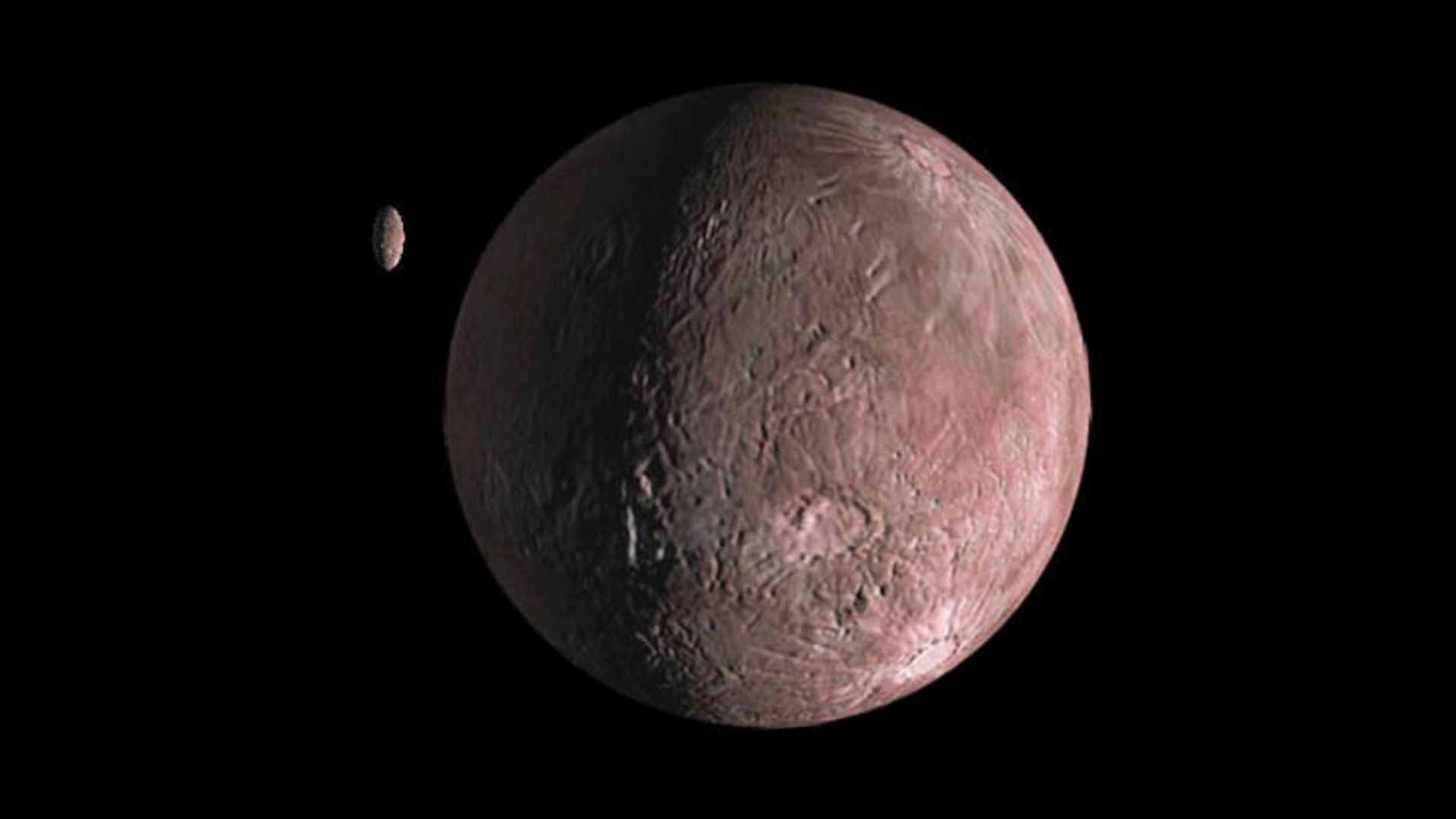
A newly discovered quasi-moon has been detected orbiting Earth, offering astronomers a rare glimpse into the complex dynamics of near-Earth objects. This tiny celestial body challenges conventional understanding of our planet’s immediate cosmic environment.
The discovery, made by a team of international astronomers, marks a significant development in the study of near-Earth space. Unlike traditional moons, which follow stable, long-term orbits around planets, a quasi-moon is an object whose orbit is temporarily influenced by Earth’s gravity. These transient companions can circle the planet for months or even years before being pulled away by the Sun or other celestial forces. The newly identified quasi-moon, though small, provides valuable insights into orbital mechanics, potential resource opportunities, and planetary defense strategies.
For decades, scientists have been cataloging asteroids and near-Earth objects to better understand their trajectories and the risks they may pose. However, the detection of a quasi-moon is less common and highlights the dynamic nature of Earth’s gravitational environment. Observing such objects not only deepens scientific knowledge but also encourages public interest in astronomy and space exploration.
Comprehending quasi-moons and their importance
Quasi-moons, sometimes referred to as temporary satellites, occupy a unique category in celestial mechanics. Unlike the Moon, which has a stable orbit spanning billions of years, quasi-moons are loosely bound to Earth and often exhibit complex orbital patterns. These bodies typically originate from the asteroid belt or other parts of the solar system before being captured temporarily by Earth’s gravity.
The newly identified quasi-satellite exhibits numerous attributes common to these transient celestial companions. Scientists observed its diminutive size, uneven form, and peculiar orbit, which varies between nearing our planet and moving further into space. Its fleeting presence intrigues researchers as it highlights the gravitational interactions among Earth, the Moon, and the Sun. Through examining these behaviors, researchers can enhance models for predicting orbital dynamics and gain deeper insights into how minor celestial entities engage with planets throughout time.
While quasi-moons are generally not considered threats to Earth, their presence has practical implications. Some scientists argue that these objects could serve as stepping-stones for future space exploration, potentially offering sites for scientific study or resource extraction. Others view them as natural laboratories for testing orbital prediction methods, refining spacecraft navigation, or preparing for asteroid deflection strategies.
How the finding occurred
The recently identified quasi-moon was discovered with the help of ground-based telescopes and space surveillance technologies. Researchers utilized sophisticated imaging methods and accurate trajectory algorithms to differentiate the object from the numerous nearby asteroids. Due to its size, which is thought to be merely several dozen meters across, meticulous monitoring was necessary to verify its short-term orbit around Earth.
This discovery is a testament to the increasing sophistication of astronomical monitoring. The ability to detect small, fast-moving objects near Earth reflects advancements in both hardware and computational modeling. By combining high-resolution imaging with predictive algorithms, scientists can identify transient satellites that would have gone unnoticed just a decade ago. The success of this observation underscores the importance of continued investment in near-Earth object monitoring programs.
In addition to technological achievements, the finding also relied on international collaboration. Observatories across multiple continents coordinated observations, sharing data and refining calculations to confirm the object’s trajectory. Such collaboration reflects the global nature of modern astronomy, where discoveries often depend on networks of researchers and institutions working in concert.
Consequences for the study of planets and space travel
The identification of a quasi-moon near Earth carries implications for both fundamental science and practical applications. For planetary scientists, it offers a rare opportunity to study a natural object in close proximity, providing insight into composition, reflectivity, and orbital dynamics. Studying such bodies can reveal details about the formation and evolution of small celestial objects, as well as their interactions with larger planetary systems.
From the viewpoint of space exploration, quasi-moons offer viable targets for missions that would be more feasible than journeys to faraway asteroids. Due to their closeness to Earth, spacecrafts could arrive there with reduced fuel usage, experiment with technologies for asteroid extraction, or collect samples that could shed light on larger inquiries about the history of the solar system. However, the transient nature of these moons necessitates meticulous scheduling for mission planning, highlighting the importance of ongoing observation and forecasting models.
Furthermore, temporary satellites aid in comprehending the threats linked with objects near Earth. While the majority are minor and unlikely to inflict major harm if they were to penetrate Earth’s atmosphere, analyzing their trajectories can enhance the accuracy of risk evaluation models. Understanding the way gravitational forces capture and liberate these bodies assists astronomers in forecasting possible dangers from future asteroids and comets that could intersect Earth’s path.
Interest from the public and learning possibilities
The discovery of a quasi-moon naturally captures the imagination of the public. Unlike distant planets or faraway galaxies, these objects occupy a region of space that is relatively close and tangible. The idea that Earth temporarily hosts small satellites sparks curiosity and provides educators with a powerful tool to engage students in astronomy and physics.
Science communicators have emphasized the opportunity to explain concepts such as gravity, orbital mechanics, and the solar system’s dynamic nature through examples like quasi-moons. By presenting these discoveries in an accessible way, scientists can inspire future generations of astronomers and engineers. Public interest also supports funding and advocacy for space research, highlighting the broader societal benefits of scientific exploration.
The interest in quasi-moons extends beyond just scholarly pursuits. Media reports and societal interaction play a role in framing human space exploration and the possibilities for tech advancements. Narratives about these transient satellites create a connection between sophisticated scientific studies and the public, making the field of space research more accessible and thrilling.
Monitoring and future research
Astronomers plan to continue tracking this newly discovered quasi-moon over the coming months to observe its trajectory, rotational dynamics, and eventual departure from Earth’s gravitational influence. Continuous monitoring will help refine models of quasi-moon behavior and contribute to broader knowledge of near-Earth space.
Future investigations might delve deeper into the physical attributes of quasi-moons. Using devices like spectrometers, researchers could examine the surface composition, aiding scientists in assessing if these bodies share traits with other near-Earth asteroids or have distinct features. Such information could support upcoming missions and possibly pinpoint objects ideal for scientific or commercial uses.
The discovery reinforces the importance of vigilance in monitoring the near-Earth environment. As technology improves, astronomers are likely to find more transient companions, creating a richer understanding of Earth’s place in the solar system. Each new object provides a case study in gravitational dynamics, offering insights that could influence both fundamental science and practical applications, including planetary defense strategies.
The identification of a previously unknown quasi-moon orbiting Earth highlights the complexity and dynamism of our cosmic neighborhood. These temporary satellites provide unique opportunities to study orbital mechanics, engage the public with astronomy, and explore potential applications for space missions. While small in size, their scientific significance is substantial, offering lessons about gravity, near-Earth objects, and the ever-changing interactions between celestial bodies.
As astronomers continue to monitor this latest discovery, it serves as a reminder that Earth’s environment extends beyond the visible sky. Even tiny, transient companions can illuminate our understanding of the solar system, bridging the gap between observation, experimentation, and exploration. The ongoing study of quasi-moons underscores the richness of near-Earth space and the enduring value of curiosity-driven research.