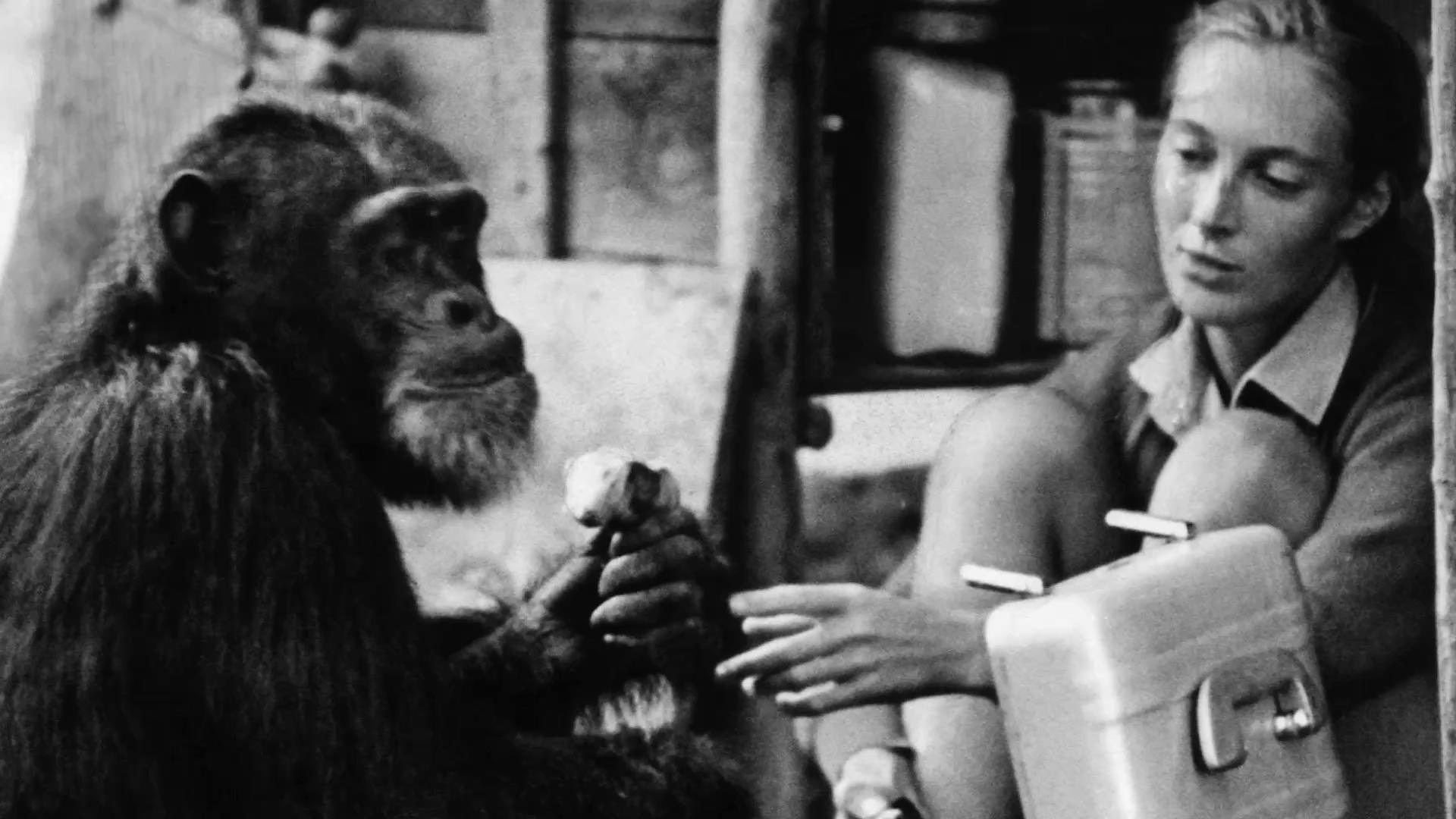
In the early 1960s, a young woman ventured into the forests of Tanzania with a notebook, binoculars, and an unshakable curiosity. What she discovered would not only revolutionize the field of primatology but also reshape how we understand our own species. Her name is now synonymous with groundbreaking research, but at the time, her methods and conclusions were considered unconventional—if not radical.
Unlike numerous researchers of that time, she perceived her study subjects not merely as data, but as beings with unique characteristics, feelings, and intricate social bonds. By studying chimpanzees in their natural habitat, she recorded actions that questioned long-standing scientific notions about the difference between humans and other primates. Her research indicated that the division between humans and other animals was much less clear-cut than previously assumed.
Over years of careful observation, she discovered that chimpanzees utilize tools, show empathy, and form close social connections. Images of chimpanzees holding hands, embracing, or grooming each other starkly opposed the dominant perspective that animals are primarily driven by instinct. These instances, though simple, carried a profound message: humans are not the only beings capable of complex emotions and social interactions.
Her findings indicated that chimpanzees could demonstrate friendliness and teamwork, yet also hostility and defensiveness. By uncovering their complete spectrum of behaviors, she provided a more truthful and detailed depiction of one of our nearest evolutionary kin. This, consequently, stimulated contemplation on the essence of human conduct, questioning beliefs about our distinguishing features.
The academic circle was initially reluctant to embrace her discoveries. During an era when impartiality and distance were deemed crucial in field studies, her choice to give names to the chimpanzees instead of assigning numbers faced disapproval. However, it was this compassionate approach that enabled her to identify behavioral patterns that had been overlooked for a long time.
Her observations extended beyond the behavior of individual animals to the dynamics of the group. She documented power struggles, alliances, maternal care, and even mourning among the chimpanzees. These insights helped establish a new field of behavioral science, one that acknowledges the emotional lives of animals and the evolutionary roots of human traits.
As her study gained recognition, it was evident that her discoveries went beyond just chimpanzees—they related to all humanity. By illuminating the emotional and intellectual abilities of nonhuman primates, she contributed to breaking down antiquated beliefs that had distinguished humans from the animal kingdom. Her efforts advocated for a more ethical perspective on the treatment of animals, whether in natural settings or in confinement.
Her influence extended well beyond the realm of science. She became a global advocate for wildlife conservation, emphasizing the importance of preserving habitats not just for the animals themselves, but for the health of ecosystems and, ultimately, the well-being of humanity. Her voice carried weight in policy discussions, educational initiatives, and grassroots movements around the world.
Decades later, her early field notes and documentary footage remain powerful testaments to the depth of connection that can exist between humans and other species. Her legacy is visible in the new generation of scientists who now study animals with compassion and humility, as well as in broader cultural shifts that recognize the intrinsic value of all life.
By questioning the notion that humans are inherently distinct from other animals, she provided an opportunity for deeper insight—not only into chimpanzees but also into human nature. Her dedication throughout her life highlights that curiosity, empathy, and respect are vital instruments for exploration, with the power to revolutionize both science and society.
The world may have initially resisted the idea that animals could feel and think in ways similar to humans. But through persistence and evidence, she helped bridge a gap in understanding that had existed for centuries. Her contributions continue to inspire deeper inquiry into the minds and lives of animals, encouraging a more thoughtful and compassionate worldview.
Today, her name is recognized not only for her contributions to science but also for sparking a worldwide dialogue regarding the interdependence of all living creatures. What started as an individual expedition into the forest evolved into a movement—one that persists in influencing our understanding of cognition, feelings, and the common strands of existence that connect us among different species.
Her story stands as a powerful example of what one person can accomplish through dedication, insight, and a willingness to question the status quo. In revealing the emotional lives of chimpanzees, she ultimately revealed something about the human spirit: its capacity to seek connection, to embrace complexity, and to grow through understanding.