

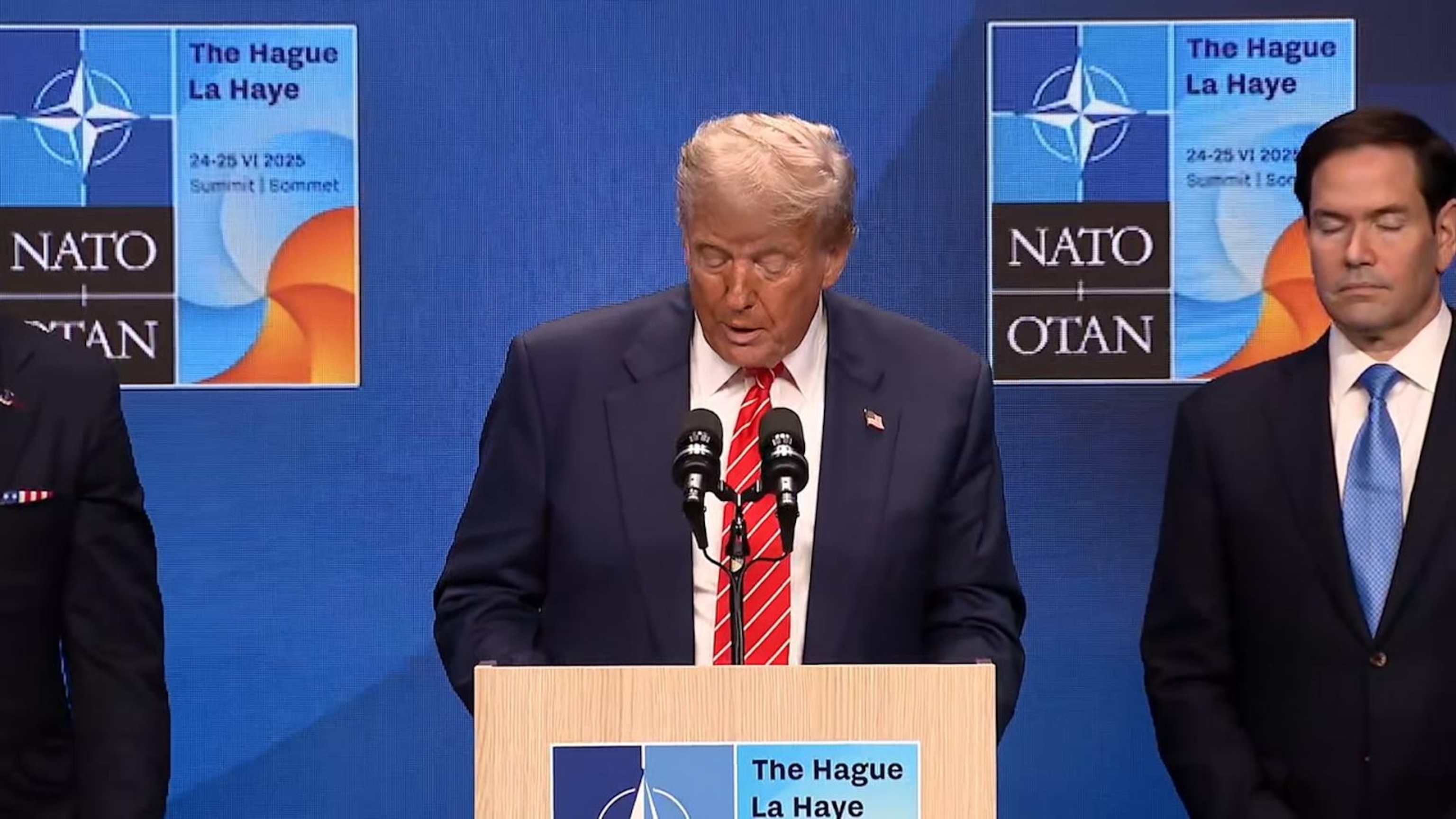
Former President Donald Trump has characterized NATO’s recent commitment to increase defense spending to 5% of GDP as a significant victory. This announcement comes as part of ongoing discussions among NATO member states regarding their financial contributions to the alliance. Trump, who has been an outspoken critic of NATO in the past, expressed his approval of the new pledge, suggesting it reflects a positive shift in the alliance’s approach to defense funding.
During his time in office, Trump often pushed NATO partners to increase their defense spending, claiming that the United States was taking on an unequal share of defense expenses. The pressure exerted by his administration on NATO members resulted in increased attention to defense budgets, motivating several countries to review and raise their military allocations. The latest pledge to reach 5% is regarded as recognition of the necessity for more financial accountability among the member countries.
The ramifications of this commitment are extensive. By allocating a greater share of GDP to defense, NATO members seek to bolster their military strength and improve shared protection. This strategy is especially important considering the changing nature of worldwide threats and challenges, such as friction with rival states. A solid defense stance is vital for preserving stability and discouraging possible aggressors.
Trump’s remarks also underscore the political dynamics within NATO. His administration’s emphasis on increased defense spending resonated with a segment of the American public that feels the U.S. should not be the primary funder of international security efforts. As NATO members work to meet this new spending target, it remains to be seen how this will impact relations among member states and their contributions moving forward.
The choice to boost defense expenditure represents a wider movement among NATO members aimed at adjusting to evolving security challenges. In the face of new dangers like cyber warfare, terrorism, and political tensions, improving military preparedness is essential for several countries. The 5% pledge might act as a driver for enhanced cooperation and partnership between allies, encouraging a more collective defense strategy.
As NATO advances with this updated financial directive, it is expected that member countries will enter into dialogues concerning efficient resource distribution. This entails assessing military strengths, updating equipment, and investing in innovative technologies. The main objective is to guarantee that the alliance stays adaptable and quick to respond to new challenges while also meeting the specific security requirements of its members.
Additionally, a rise in defense budgets might result in a more equitable allocation of military resources within NATO. In the past, some nations have depended significantly on the U.S. for protection, sparking discussions on shared responsibilities. This new commitment might motivate countries to assume greater control over their defense duties, thereby enhancing the alliance overall.
In conclusion, Trump’s endorsement of NATO’s commitment to 5% defense spending highlights the ongoing evolution of the alliance in response to contemporary security challenges. As member states work to fulfill this pledge, the potential for enhanced military collaboration and increased defense capabilities may reshape the future of NATO. The emphasis on shared responsibility and collective security will be pivotal as the alliance navigates the complexities of the global security environment.


