

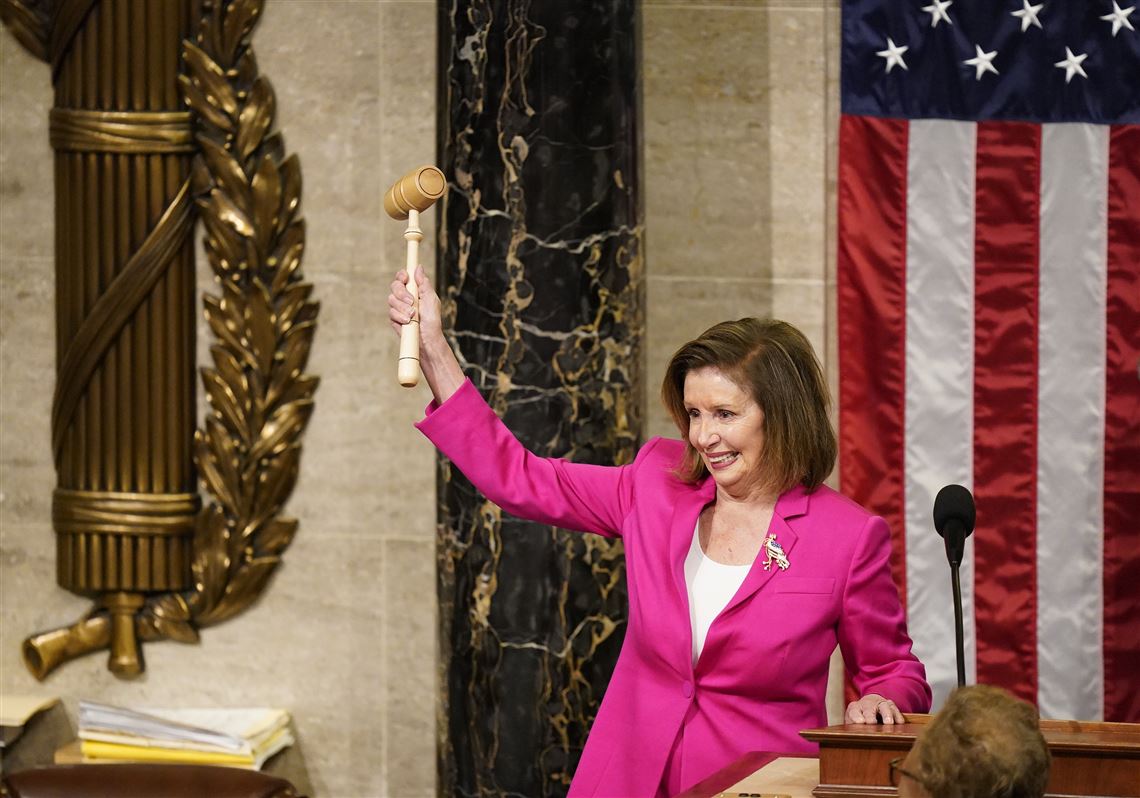
In a heartfelt farewell to her decades-long career, Nancy Pelosi, the first woman to serve as Speaker of the U.S. House of Representatives, has announced she will not seek re-election in 2026. Her departure marks the end of an era in American politics and the beginning of a new chapter for California’s political landscape.
Nancy Pelosi, one of the most influential figures in modern U.S. politics, confirmed her decision in a video message addressed to the people of San Francisco. Against a backdrop of the city’s iconic landmarks — from the Golden Gate Bridge to the Coit Tower — the 85-year-old congresswoman reflected on her journey, expressing gratitude to her constituents and promising to dedicate her final year in office to serving them with pride.
Pelosi’s declaration wasn’t unexpected by numerous individuals on Capitol Hill. News earlier in the week had already suggested that prominent California Democrats were getting ready for the time when the veteran representative would retire from public service. Her declaration merely formalized what many had foreseen: that one of the Democratic Party’s most influential and divisive figures was prepared to hand over the reins.
A legacy of leadership and influence
Throughout a professional journey spanning almost forty years, Pelosi emerged as a pivotal personality in the annals of American politics. She guided House Democrats for two decades, from 2002 until 2022, and held the position of Speaker on two separate occasions — initially from 2007 to 2011, and subsequently from 2019 to 2023. Her time in office was characterized by both significant achievements and intense political confrontations.
Pelosi worked closely with Democratic presidents Barack Obama and Joe Biden, playing a key role in major legislative achievements such as the Affordable Care Act and the American Rescue Plan. At the same time, she became a formidable opponent to Republican administrations, standing at the forefront of the opposition to George W. Bush’s policies and later leading efforts to hold Donald Trump accountable during his presidency.
Although she stepped down as Democratic leader three years ago, Pelosi continued serving as a member of Congress and was honored by her colleagues with the honorary title of “speaker emerita.” Her enduring presence in the House reflected both her political resilience and the deep respect she commanded among allies and adversaries alike.
The decision to step aside
Pelosi had previously hinted that her decision about seeking another term would depend on the outcome of California’s Proposition 50, a measure tied to the state’s new congressional map designed to counter Republican redistricting maneuvers nationwide. Once the measure passed, Pelosi determined that the moment had arrived to make way for new leadership.
Her exit paves the way for what is anticipated to be among the most fiercely contested congressional contests in San Francisco in almost four decades. Two Democratic hopefuls — state senator Scott Weiner and former tech executive Saikat Chakrabarti, a co-founder of the Justice Democrats — have already announced their bids. Pelosi’s declaration will probably draw more individuals keen to secure her position in one of the nation’s most consistently liberal districts.
In her video message, Pelosi spoke directly to her constituents, urging them to continue participating actively in democracy. “San Francisco, know your power,” she said. “We have made history and progress together. Now it’s time to continue leading by remaining fully engaged and standing up for the ideals that define our nation.”
From Baltimore roots to national prominence
Pelosi’s narrative commenced a considerable distance from the Californian shoreline. Hailing from Baltimore in 1940, she was born into a politically entrenched family, experiencing public service from her formative years. Her father, Thomas D’Alesandro Jr., held positions as both a U.S. congressman and Baltimore’s mayor, and her brother subsequently occupied the same mayoral post years afterward.
Her initial encounters profoundly influenced her political trajectory. Following her relocation to San Francisco alongside her spouse, Paul Pelosi, and the upbringing of their five offspring, she ventured into the political arena, initially operating discreetly within the California Democratic Party. In 1987, she contested a special election to occupy the vacant seat of the deceased Representative Sala Burton — and emerged victorious, thereby commencing what would evolve into one of the most enduring and impactful congressional tenures ever recorded.
From her first days in Congress, Pelosi was recognized for her strategic skills and ability to navigate the complexities of legislative politics. She secured positions on influential committees, including Appropriations and Intelligence, gaining insight into budgetary and national security issues that would later strengthen her leadership credentials.
Shattering obstacles and forging a legacy
Pelosi’s ascent to leadership was marked by persistence and political acumen. In 2001, she won a tightly contested race for House Minority Whip, defeating Maryland Representative Steny Hoyer, an old colleague from their early Capitol Hill days. Her victory made her the highest-ranking woman ever in Congress at the time.
A mere twelve months subsequent to the Democratic party’s setback in the mid-term elections, Pelosi secured the position of House Minority Leader through a conclusive ballot, solidifying her role as the leader of the Democratic faction. Her approach to leadership, marked by rigor, diplomacy, and astute planning, was instrumental in bringing her party together during periods of significant political unrest.
In 2007, Pelosi accomplished what many considered unattainable: she ascended to the role of the first female Speaker of the House in U.S. history. This event represented not just a personal victory but also a significant advancement for women within the American political landscape. Her leadership marked the dawn of a new age of inclusion, motivating countless future female leaders to seek public service.
During her years as Speaker, Pelosi steered her caucus through landmark legislative victories and bitter partisan clashes. She oversaw the passage of sweeping reforms under President Obama, including the Affordable Care Act, and later navigated two impeachment proceedings against President Trump. Her reputation for maintaining discipline among her ranks earned her admiration and criticism in equal measure.
A lasting impact on American politics
Pelosi’s impact reached well beyond the halls of Congress. She emerged as an emblem of Democratic fortitude, a highly effective fundraiser, and a central architect in defining the party’s national objectives. Her time in office showcased both her profound understanding of parliamentary processes and her skill in navigating the evolving landscape of American political affairs.
Throughout her professional journey, she encountered fierce resistance from conservative factions who perceived her as a symbol of San Francisco’s liberal political landscape. Simultaneously, progressive groups occasionally urged her to adopt more audacious reforms. Nevertheless, her enduring presence and efficacy demonstrated her unparalleled ability to reconcile divergent forces within her political party.
Even as she prepares to step away, Pelosi’s impact remains undeniable. Her leadership paved the way for a new generation of women in politics and redefined the role of Speaker of the House as both a policymaker and a political strategist.
Her departure also marks a moment of reflection for Democrats nationwide. As the party looks toward the future, Pelosi’s legacy serves as both a foundation and a challenge — a reminder of what disciplined leadership, strategic negotiation, and unwavering conviction can achieve in the face of division.
As her extensive congressional tenure draws to a close, Pelosi bequeaths not merely a political heritage but also a personal one, deeply anchored in kinship, conviction, and the conviction that advancement is a collective endeavor. Her choice to forgo re-election in 2026 marks the conclusion of a pivotal era in American governance—an era shaped by a woman who, across decades of transformation, consistently upheld her faith in the efficacy of public service.
Nancy Pelosi’s farewell is not just the conclusion of a political journey but a testament to endurance, leadership, and the enduring spirit of democracy that she helped shape for generations to come.


